

Craniosacral Therapy CST
Both of our Physiotherapists at the Health Recovery Clinic are fully qualified to conduct CranioSacral therapy sessions having undergone training at the Upledger Institute UK.
With over 19 years clinical experience treating patients of all ages, from new born babies to those in later life.
FAQs
What Does CranioSacral Therapy Mean?
CRANIO = HEAD | SACRAL = BASE OF SPINE
“Cranio” refers to the cranium (head), and “sacral” refers to the sacrum, the bone at the base of your spine. In CranioSacral Therapy, we often work between these two areas because everything is connected through the nervous system, fascia, vessels, and other tissues.
Why CranioSacral Therapy May Work Beyond the Head and Sacrum?
Though the name focuses on the head and sacrum, we may treat anywhere on the body and sometimes in the mouth. The body is an interconnected system where spinal cord nerves, connective tissues and fascia create links from head to toe.
How Does CranioSacral Therapy Work?
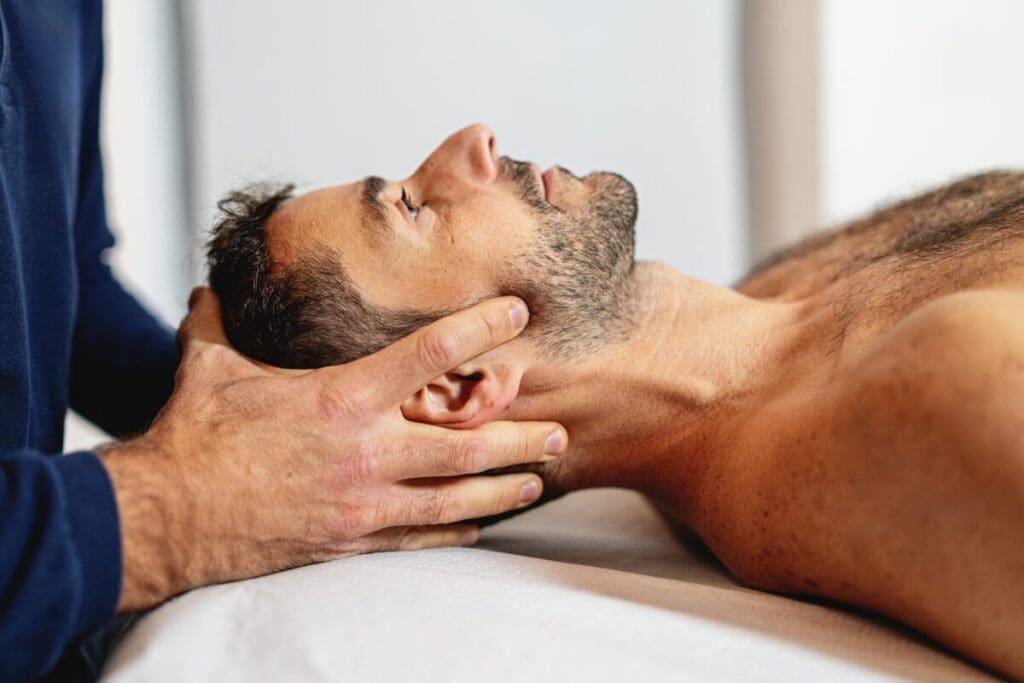
We use gentle touch to encourage subtle movement and fluid flow in the body. Sometimes it’s active, like straightening a wrinkled sleeve. Other times, our hands simply hold still and support whatever the body needs to do. We listen with our hands and respond to the body’s signals.
The Body’s Inner Wisdom?
A key principle of CranioSacral Therapy is the body’s ability to self-regulate and heal. This idea comes from our osteopathic roots and other bodywork traditions. We often call it the “inner physician” or “inner wisdom.”
We don’t aim to fix or diagnose in the traditional sense. Instead, we listen closely and follow what the body is showing us. Our job is to create space and trust the body’s process.
Who is CranioSacral Therapy For?
Because CST is about a way of connecting with another person, and supporting their own inner healing mechanism, it is for anyone from newborn babies to the elderly.
Newborns whose systems may have simply become a bit misaligned during their nine months in utero or from that sometimes challenging birth process.
It is also fantastic to work with older people who want to keep their fascia and functioning as top notch as possible.
Used for maintenance of general health or regularly for more chronic problems, it is also something you can return to over and over.
What can CranioSacral Therapy Help?
It can be effective for a wide range of problems that bring discomfort, pain or dysfunction. Typically treatments are so relaxing to receive and this in itself complements and stimulate the body’s natural healing processes. As well as helping what you came for, you might find ignored, hidden or even forgotten problems are often resolved as well.
CST techniques influence movement and coordination, pain pathways, the digestive system, the respiratory system, heart function, the endocrine system and the majority of the body systems.
It focuses on areas that are holding tension, injury and even emotions, helping to release whatever the body needs, and is ready, to let go of.
How will I feel after a session?
Typically, you will feel relaxed both during and after a session, though some sessions may feel very different from others and all bodies are different.
Afterwards, you may feel energised, or calm, or you may feel tired and want to rest. It depends on what is going on and the way your body responds to what changed.
Ideally arrange your day to allow for any of these possible responses.
How many CranioSacral Therapy Sessions Will I Need?
The answer depends on many factors — how long you’ve had the condition, what caused it and what’s contributing to it now.
Some people come for help with a specific physical issue, which may improve quickly. Others seek support for complex health problems or emotional patterns, which may take more time.
We typically suggest starting with three sessions. This gives your body and nervous system time to respond, process, and begin to shift.